Blog
ELIYA Linen - Professional Hotel Linen Manufacturer for One-Stop luxury hotel supplies purchasing Since 2006.
Language
ELIYA Linen - Professional Hotel Linen Manufacturer for One-Stop luxury hotel supplies purchasing Since 2006.
A down comforter can make or break a guest’s sleep. Too heavy, and it feels suffocating. Too light, and it feels cheap. The wrong choice doesn’t just impact comfort—it eats into budgets, shortens product lifespan, and creates a cycle of constant replacement.
Procurement mistakes often happen when decisions are based on price tags or brand names alone. The reality? Quality duvets aren’t one-size-fits-all. They’re engineered through precise choices in filling, loft, and cost management. Knowing how these factors interact is what separates a wise investment from an expensive regret.
This article cuts through the noise. You’ll see exactly how hotels select duvets that balance comfort with cost efficiency, and how you can avoid the same pitfalls.
● What type of duvets do hotels actually use?
● Key filling materials and their trade-offs
● Loft and fill power explained in practical terms
● Smart cost control strategies to prevent overspending
● A framework for choosing a hotel down comforter that delivers consistent results
Every section is designed to save you from costly missteps while giving you clear, actionable takeaways. So let’s get started!
A duvet in a hotel isn’t chosen at random. Every decision—weight, filling, and fabric—serves a purpose. The goal is simple: keep guests comfortable across seasons without creating extra work or cost for housekeeping.
Most hotels land on a medium-weight option in the 10.5–12 tog range. It’s the sweet spot. Warm enough for colder months, light enough for air-conditioned summers. By sticking to a standard, hotels avoid the expense of swapping duvets seasonally.
When it comes to filling, the market splits into two camps:
● Down or feather blends → deliver luxury, breathability, and that “five-star feel.”
● Down-alternative synthetics → cost-effective, hypoallergenic, and built to survive heavy laundering.
Fabric shells matter, too. A high-thread-count cotton casing locks the fill in place and withstands industrial washing, while crisp white remains the universal standard for hygiene and consistency.
Here’s how duvet choices often break down across hotel categories:
Hotel Category | Typical Duvet Choice | Reasoning |
Budget / Economy | Synthetic down-alternative | Affordable, durable, hypoallergenic |
Mid-Range / Business | Blended (down + synthetic) | Balance of comfort and cost efficiency |
Luxury / Five-Star | High fill-power goose down or feather | Premium softness, breathability, and guest prestige |
A hotel-quality duvet isn’t measured by how plush it looks in marketing photos. It’s judged by how consistently it performs across hundreds of washes and thousands of guest stays.

The filling inside a duvet defines its performance more than the shell or stitching. It controls warmth, weight, breathability, and cost. Hotels tend to choose between three categories: natural, synthetic, and blended. Each has clear advantages — and pitfalls if chosen poorly.
● Goose or duck down → prized for loft, softness, and insulation.
● Feather + down blends → firmer feel, lower cost, still breathable.
● Pros: unmatched comfort, lightweight, excellent temperature regulation.
● Cons: higher price, sensitive to moisture, can trigger allergies.
● Microfiber / hollowfibre → engineered to mimic down.
● Pros: durable, hypoallergenic, and easier to wash at high temperatures.
● Cons: heavier for the same warmth, less luxurious feel, flatter over time.
● A mix of down and synthetic fibers.
● Pros: compromise on cost vs. comfort, more resilient than pure down.
● Cons: inconsistent feel, not as premium as full down.
Here’s a direct comparison:
Filling Type | Pros | Cons | Best Fit For |
Goose/Duck Down | Luxurious, breathable, lightweight, high-loft | Expensive, delicate, allergy risks | Luxury or boutique hotels |
Feather Blends | Affordable, firm support, still breathable | Heavier, less loft | Mid-range hotels |
Synthetic | Durable, hypoallergenic, easy to clean | Less insulating, flatter over time | Budget or high-turnover hotels |
Blended | Balance of comfort and durability, lower cost | Inconsistent quality, mid-tier softness | Business or extended-stay hotels |
If you want longevity without constant replacements, synthetic down alternatives often outperform down in busy properties where duvets are laundered weekly. But for luxury, nothing beats pure goose down.
Loft is what gives a duvet its body. It’s the “fluff factor” that makes a comforter look inviting and feel insulating. But loft isn’t just about appearance. It directly ties to fill power — a measure of how well down traps air and creates warmth without weight.
For hotels, consistency matters more than extremes. A duvet with 500–700 fill power usually strikes the right balance. Anything lower feels flat and lifeless. Anything higher costs more and often proves unnecessary for daily turnover.
Hotels rarely change duvets with the seasons. Instead, they standardize on a mid-range tog (10.5–12) that works year-round. The right loft keeps guests comfortable regardless of outside weather, minimizing complaints and reducing the need for seasonal inventory.
Here’s a quick guide:
Fill Power (FP) | Loft & Warmth Level | Common Hotel Use |
400–500 FP | Low loft, lightweight warmth | Budget or warm-climate hotels |
500–700 FP | Medium loft, balanced warmth | Standard for most hotels worldwide |
700+ FP | High loft, premium warmth | Luxury suites & five-star resorts |
Don’t confuse loft with thickness. A bulky duvet can look impressive but still perform poorly if the fill power is low.
Procurement mistakes often hide in the numbers. A comforter that looks economical at first glance may drain budgets through accelerated wear, high laundering losses, or inconsistent supply chains. The key is to shift focus from unit cost to total cost of ownership (TCO).
In hotel procurement, the upfront cost of a duvet tells only part of the story. The true benchmark is the cost per serviceable cycle. Comforters undergo repeated high-temperature laundering (typically 60–90°C) with heavy-duty detergents. Fillings that degrade quickly lose loft, develop cold spots, and fail guest expectations.
To calculate lifecycle cost, procurement managers should model:
● Wash durability: Number of industrial wash cycles a comforter withstands before performance failure (clumping, casing tears, or loft loss).
● Unit acquisition price: Initial purchase cost.
● Average cycle load: Frequency of laundering based on occupancy and housekeeping protocols.
Formula: Lifecycle cost per wash = Unit Price ÷ Number of Serviceable Washes
Example:
● Synthetic duvet: $90 ÷ 150 washes = $0.60 per use
● Down-blend duvet: $140 ÷ 350 washes = $0.40 per use
The higher-priced unit delivers better ROI by reducing replacement frequency, minimizing procurement workload, and ensuring guest comfort consistency.
Operational efficiency in hotels often collapses under the weight of fragmented inventory. Stocking different duvets for summer, winter, suites, and standard rooms creates logistical bottlenecks. Seasonal rotation introduces storage overhead, staff training requirements, and mismatch errors that impact guest experience.
By standardizing on an all-season duvet specification (commonly 10.5–12 tog, 500–650 fill power), hotels can:
● Streamline purchasing: One SKU reduces procurement complexity.
● Optimize laundry throughput: Predictable bulk washing reduces downtime and improves load planning.
● Lower shrinkage risk: Uniform inventory cuts the chance of misallocation across room categories.
Advanced operators use linen management systems (LMS) with RFID or barcode tagging. These track cycle counts, flag underperforming units, and enable predictive replacement. A standardized inventory amplifies the efficiency of such systems by removing variable specifications.
Short-term purchasing exposes hotels to commodity market fluctuations in down, polyester, and cotton. A well-structured supplier contract mitigates these risks while embedding technical performance guarantees.
Key contract inclusions:
● Price locks: Multi-year agreements that stabilize procurement budgets against market volatility.
● Performance warranties: Minimum wash-cycle durability thresholds (e.g., ≥80% loft retention after 200 washes, validated by ISO 6330 laundering tests).
● Certifications: Fill materials tested to EN 12934 (European down/feather quality standard), casing fabrics tested to ASTM D3776 (fabric mass per unit area) or ISO 13938 (bursting strength).
● Batch consistency: Supplier must provide documented fill power ranges and casing thread counts with each delivery lot.
Leading hotels also negotiate replacement clauses, ensuring defective units are credited or replaced without disrupting stock availability.
Different hotel classes justify different specifications based on guest expectations, ADR (average daily rate), and operating models:
● Luxury and five-star hotels: Goose down or high-fill power (650+ FP) comforters deliver the tactile luxury expected at this tier. ROI stems from brand reputation, guest loyalty, and premium pricing models that absorb higher unit costs. Duvets should be paired with 300+ thread count casings for both feel and durability.
● Upper mid-scale/business hotels: Down-and-synthetic blends balance comfort with operational resilience. Typically, 500–650 FP fills. These properties benefit from reduced replacement cycles while maintaining a premium feel that aligns with business traveler expectations.
● Economy hotels: High-quality synthetic alternatives engineered for hypoallergenic and long-wash resilience dominate here. The focus is on maximizing wash cycles (≥200) while minimizing per-unit costs.
This tier-based optimization allows procurement teams to align comforter specifications with guest value perception, rather than overspending where returns don’t exist.
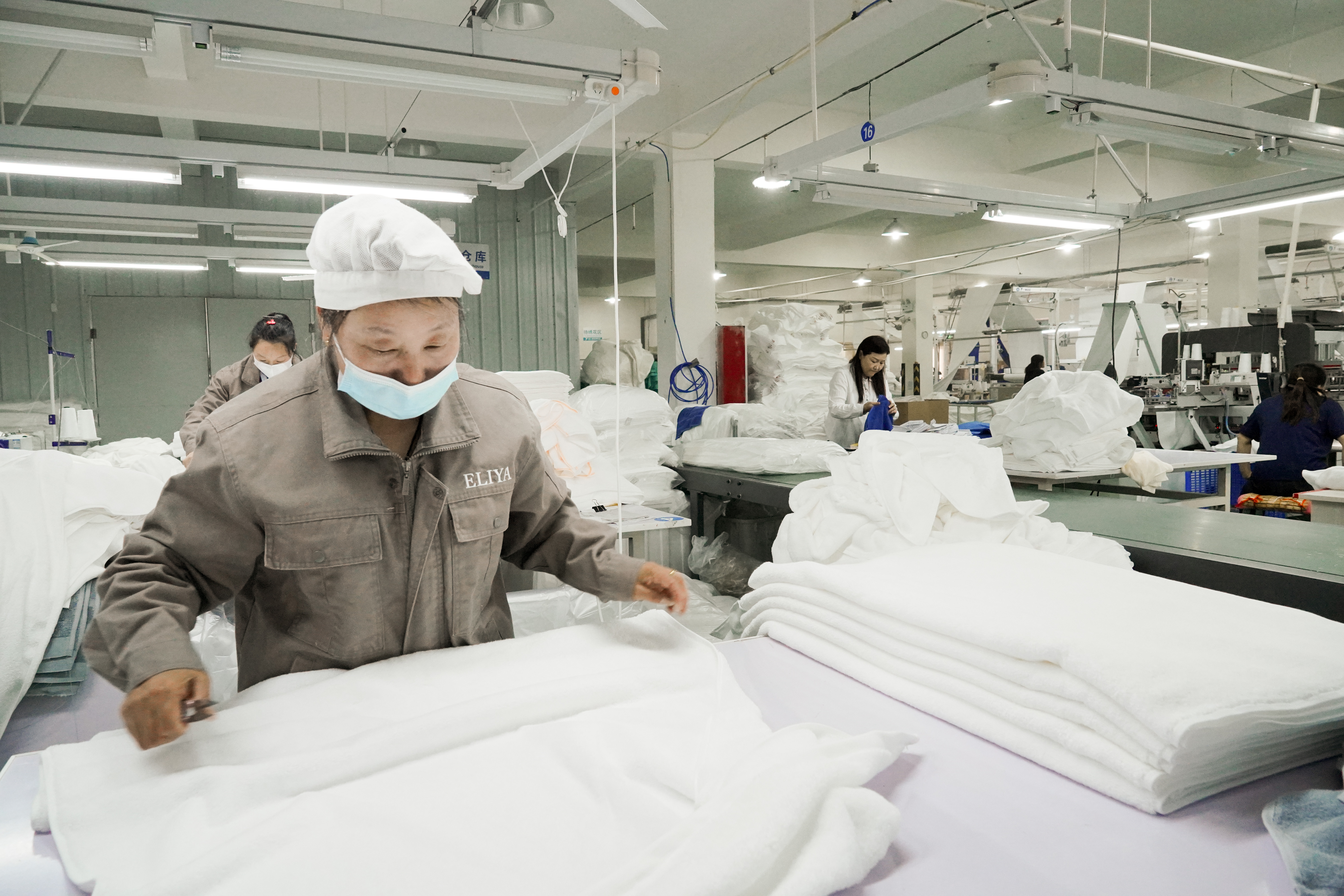
Procurement does not end at purchase. Duvet specifications must integrate with the hotel’s operational infrastructure, especially laundry capacity.
● Machine compatibility: Overfilled duvets with excessive loft often exceed the drum volume of commercial machines, leading to abrasion, uneven drying, and shortened lifespan. Correct sizing reduces mechanical stress.
● Energy efficiency: Higher loft duvets require extended drying cycles. This increases energy consumption and operational costs. Specifying fill and casing materials that dry efficiently without clumping lowers both utility bills and carbon footprint.
● Transportation and storage: Bulk deliveries must account for compression resistance. Poorly packed duvets may lose loft before first use. Vacuum packing with controlled re-fluffing processes ensures integrity upon arrival.
● Housekeeping ergonomics: Excessively heavy or oversized comforters slow bed-making and contribute to staff fatigue. Procurement aligned with ergonomic standards (e.g., ≤3.5kg per unit for double/queen sizes) reduces occupational risk.
By aligning duvet specifications with operational systems, hotels cut hidden costs, extend lifespan, and safeguard staff efficiency.
Choosing the wrong duvet can leave you with restless guests and spiraling costs. Choosing the right one transforms procurement from a recurring headache into a system that works quietly in the background, night after night. By now, you’ve seen how filling type, loft, and lifecycle management come together to define not only comfort but also long-term profitability. You’re equipped with the technical insights to make confident, informed decisions.
Key takeaways from this analysis:
● Hotels standardize around 10.5–12 tog duvets to balance year-round comfort with operational simplicity.
● Filling materials dictate durability and guest satisfaction — goose down for luxury, synthetics for durability, blends for balance.
● Loft and fill power aren’t cosmetic; they’re performance markers tied directly to insulation and lifespan.
● Lifecycle costing is the true measure of value, not sticker price.
● Standardization, contracts, and logistics alignment create efficiencies that multiply savings across laundry, storage, and housekeeping operations.
Procurement isn’t about picking the fluffiest comforter off a catalog page. It’s about aligning material science with guest expectations, financial controls, and operational systems. The hoteliers who master this balance are the ones who deliver consistent quality without waste.
ELIYA Hotel Linen Co., Ltd, with its focus on professional-grade linens and proven track record in hospitality supply, remains a trusted partner in ensuring that every hotel quality duvet meets both comfort and cost-performance benchmarks.
Copyright © 2026 Guangdong ELIYA Hotel Linen. Co., Ltd - www.eliyachina.com All Rights Reserved.